Castep defaults to regarding systems as metallic, at which point it cannot calculate the splitting. For the diamond examples, this does not matter. There is no splitting. But what for silicon carbide in its diamond (cubic) form?
$ c2x --phbands_gnu SiC.phonon out.gnu
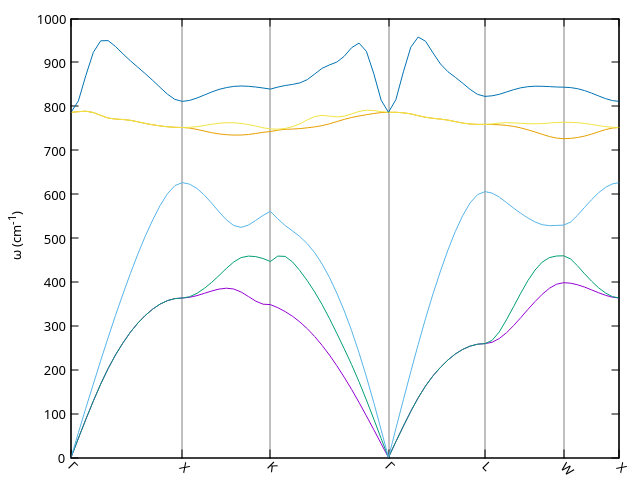
The manner in which the top band dives down to meet the others at Γ is a little suspicious, but it does so smoothly as the error is on the 8x8x8 grid on which the phonons were calculated, but this has been interpolated to produce the band structure.
If one adds to the param file the extra line
fix_occupancy : TRUE
then Castep treats the system as an insulator, and calculates Born charges and also the LO-TO splitting.
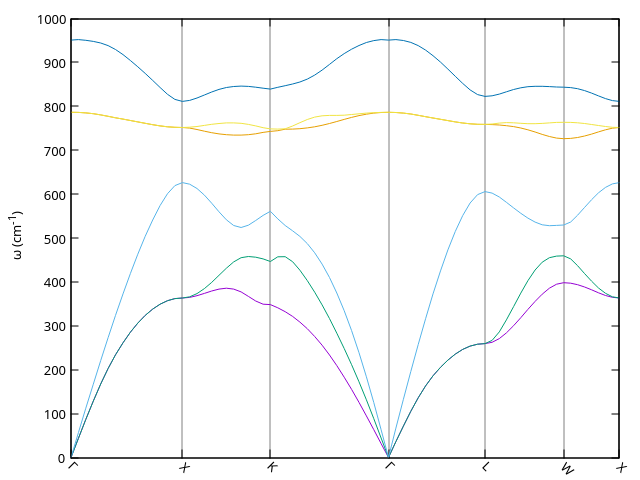
The resulting band structure now shows the single longitudinal optical mode at Γ as having a higher frequency than the two transverse optical modes.
Failure to calculate LO-TO splitting will make a significant change to the band structure around Γ, and a small change to the density of states.